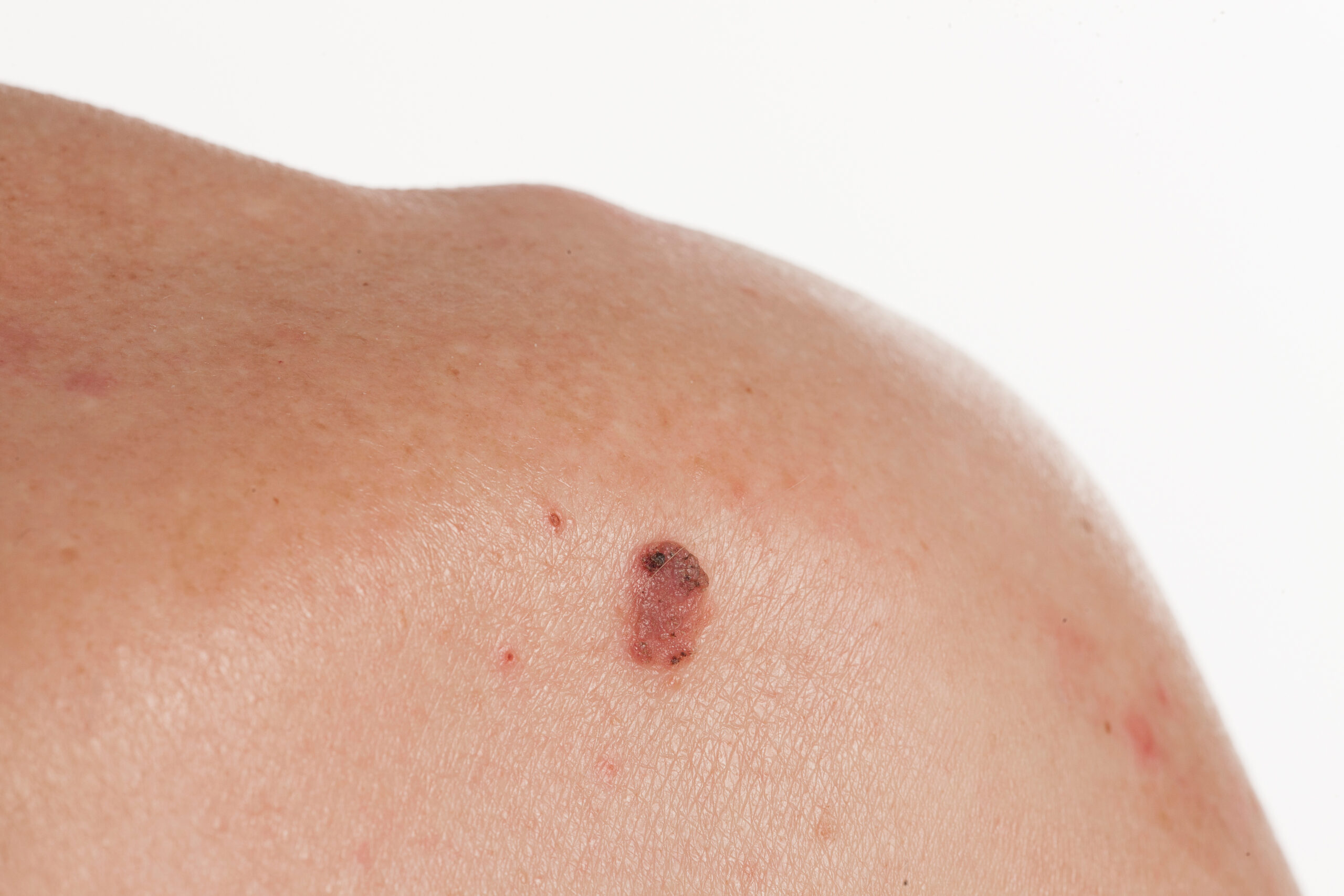
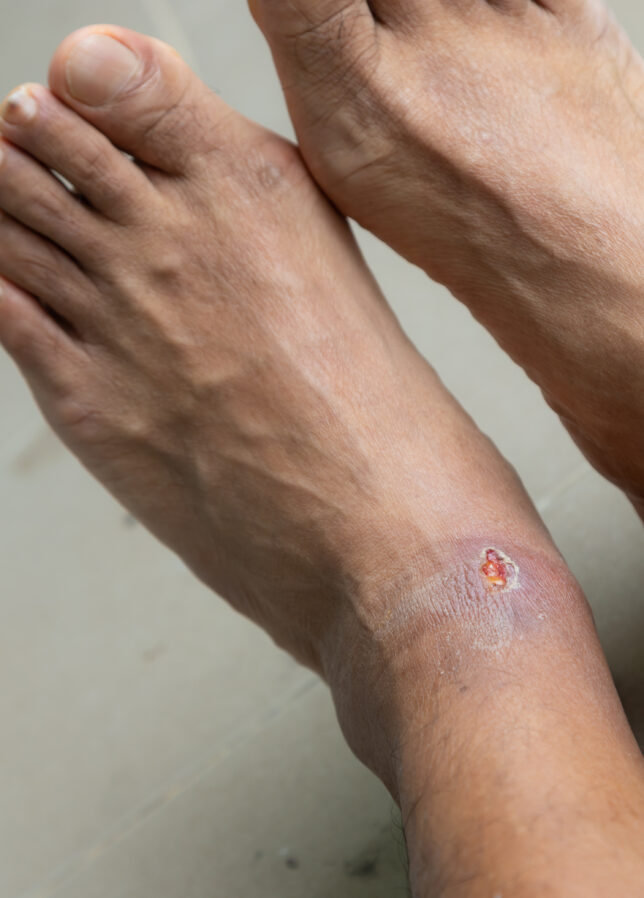
A Mohs procedure is a specialised surgical technique used to treat selected skin cancers, particularly high-risk basal cell carcinoma (BCC) and squamous cell carcinoma (SCC). It combines staged tissue removal with microscopic examination of the entire peripheral and deep margins – the outer edges and base of the removed tissue.
By mapping any remaining cancer cells, the practitioner can precisely target further tissue removal while conserving healthy skin. This approach is particularly useful for cancers in sensitive locations, those with poorly defined borders, or those that have returned after previous treatment.
Planning a Mohs procedure begins with understanding your diagnosis. Your dermatologist will review any biopsy results, examine the treatment site and consider your medical history to determine whether the procedure is appropriate. They will discuss alternative treatments and refer you to a Mohs practitioner where needed.
During the procedure, your Mohs practitioner personally examines the tissue slides, drawing on their training in microscopic assessment to identify any cancer cells at the tissue margins. These findings guide further removal while conserving healthy tissue before the wound is repaired. The Skin Hospital provides on-site pathology services through our partnership with Douglass Hanly Moir Pathology (DHM), with additional specialist pathology support available from DHM.
The extent of a skin cancer is not always visible on the surface. The number of stages needed and the final wound size may therefore only become clear during the procedure. Your practitioner will explain how this may affect treatment, wound repair and recovery, and discuss potential risks and your individual concerns.
The Skin Hospital has provided Mohs procedures since 1991 and contributes to the training of Mohs practitioners in Australia, through the Mohs Fellowship. Our team of more than 15 Mohs practitioners performs more than 2,500 procedures annually, supported by dedicated Mohs nurses and technicians. Treatment is available at our Darlinghurst and Westmead locations.
Our Mohs practitioners are specialist dermatologists with additional training in Mohs micrographic surgery. We offer Mohs procedures at both our Darlinghurst and Westmead locations.
Have you noticed a spot of concern? Book a skin check with one of our dermatologists to have it assessed and discuss appropriate treatment options.
If your spot has already been assessed and Mohs has been recommended, contact our team to discuss arranging a Mohs consultation. Your practitioner will review your diagnosis and determine whether Mohs is suitable for you.
A Mohs procedure is a specialised treatment for certain skin cancers. Your practitioner removes tissue in stages and examines it under a microscope, checking the edges and base for cancer cells.
Further tissue is removed where needed until no cancer cells are seen at the examined margins. This approach aims to remove the cancer while preserving as much healthy skin as possible.
A Mohs procedure may be recommended for certain basal cell carcinomas (BCCs) and squamous cell carcinomas (SCCs), particularly in areas such as the nose, eyelids, lips and ears.
It may also be appropriate for cancers that have returned, have unclear borders or have other higher-risk features. Not every skin cancer requires a Mohs procedure; your practitioner will discuss suitable treatment options with you.
The Skin Hospital offers both standard skin cancer excisions and Mohs procedures. Your dermatologist will recommend an approach based on the type, size and location of your skin cancer, along with other factors relevant to your care.
With a standard excision, the skin cancer is removed and the tissue is sent for laboratory examination, with results available later. During a Mohs procedure, tissue is removed in stages and examined on site before the wound is repaired. This allows your practitioner to identify any remaining cancer at the examined edges and guide further removal during the procedure.
Our team supports you from initial assessment through to treatment and wound care. Dermatologists consulting at The Skin Hospital can assess your skin and refer you internally to a Mohs practitioner if appropriate.
Our Mohs practitioners have additional training in both the procedure and the microscopic examination of tissue. They personally examine the slides and use the findings to guide treatment. Through our partnership with Douglass Hanly Moir Pathology (DHM), we also have on-site pathologists providing specialist pathology expertise, alongside our dedicated nurses and technicians.
Where a wound requires additional reconstructive expertise, we work with plastic surgeons and other specialists, including oculoplastic surgeons for repairs involving the eyelids and surrounding area. Your practitioner will discuss the appropriate approach and coordinate any specialist involvement needed.
Follow your treating team’s instructions, including advice about eating and drinking. Tell them about your medicines, supplements, allergies and medical conditions. Do not stop prescribed medicines, including blood thinners, unless your treating doctor advises you to. Wear comfortable clothing and bring something to occupy you during waiting periods.
A Mohs procedure is usually performed under local anaesthetic while you remain awake. The injection may briefly sting. Once the area is numb, you should not feel sharp pain; tell your practitioner if you feel discomfort so they can assess whether more anaesthetic is needed.
Your practitioner confirms the treatment site, numbs the area and removes the first layer of tissue. A dressing is applied while the sample is prepared and examined. If cancer remains, another stage is performed.
Allow the day for your appointment, as the number of stages and time needed for wound repair cannot always be predicted beforehand. Much of the appointment involves waiting for tissue examination.
Usually, your practitioner can tell you on the day whether the examined tissue margins are clear of cancer. Some cases need additional laboratory testing. Clear margins do not eliminate the possibility of recurrence, so ongoing review remains important.
A Mohs procedure leaves a wound and a scar. Wound repair aims to support healing, preserve function and achieve the best cosmetic result possible for your circumstances. Depending on the wound’s size and location, it may heal naturally or require stitches, a skin flap or a graft.
Your practitioner will explain the options and involve another specialist in the repair where appropriate. The final appearance of the scar varies between patients and usually changes as it heals.
A Mohs procedure is usually a day procedure. Arrange for someone to take you home and confirm transport requirements with your treating team. Dressings, the treatment location or any additional medicines may affect your ability to drive safely.
Recovery depends on the size and location of the area treated and how the wound is repaired. You may experience some discomfort, swelling or bruising while it heals.
Your care team will provide clear instructions on caring for your wound, changing dressings and managing discomfort, along with advice on returning to work and exercise. They will also explain any follow-up appointments, when stitches may need to be removed, and what to watch for and when to contact us.
This depends on the wound’s location, how it is repaired and your usual activities. Ask your practitioner when you can resume work, exercise, heavy lifting and swimming, and whether you need a medical certificate.
Yes. Follow-up allows your dermatologist to monitor the treated area and check for other skin cancers. They will recommend a review schedule based on your history and risk.
The Skin Hospital also offers total body imaging to help monitor your skin over time. These images provide a baseline for comparison at future appointments, helping your dermatologist assess new or changing spots alongside regular skin checks. Your dermatologist can advise whether imaging is appropriate for you.
Continue sun protection and arrange an assessment if you notice a new or changing spot, rather than waiting for your next scheduled appointment.
Concerned about a new or changing spot? Book a skin check at The Skin Hospital to have your skin assessed by a dermatologist.
If treatment is needed, they will discuss your options and whether Mohs micrographic surgery may be appropriate.