Skip to:

Close
Search
A Different Kind of Aesthetic Medicine
Aesthetic, procedural and laser dermatology sits at the intersection of medicine and skin science. It requires not just technical skill with devices, but a deep understanding of the conditions being treated – the immunology of rosacea, the hormonal drivers of melasma, the continuum between sun damage and skin cancer. At The Skin Hospital, that understanding is the foundation of everything we do.
Our Suite
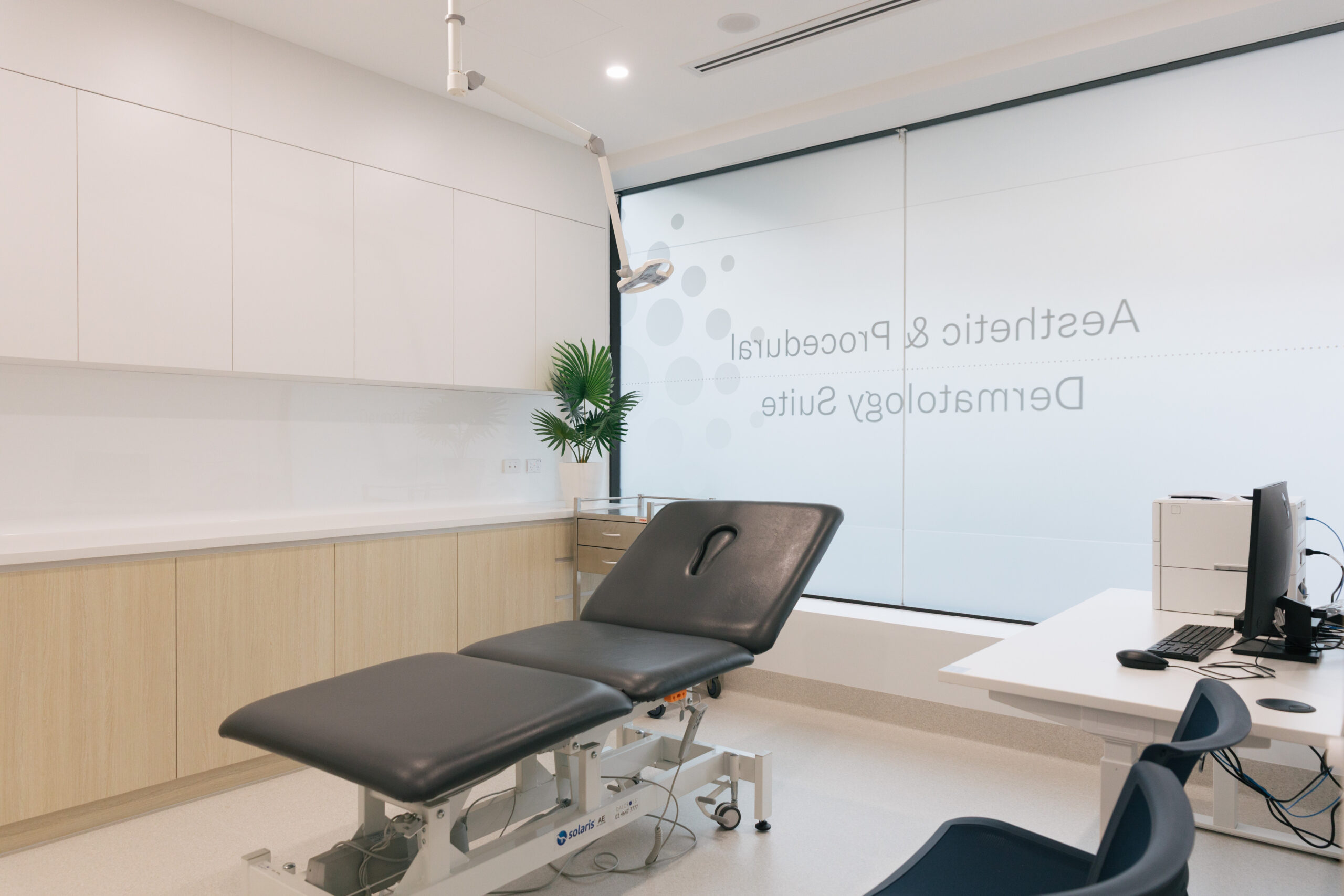
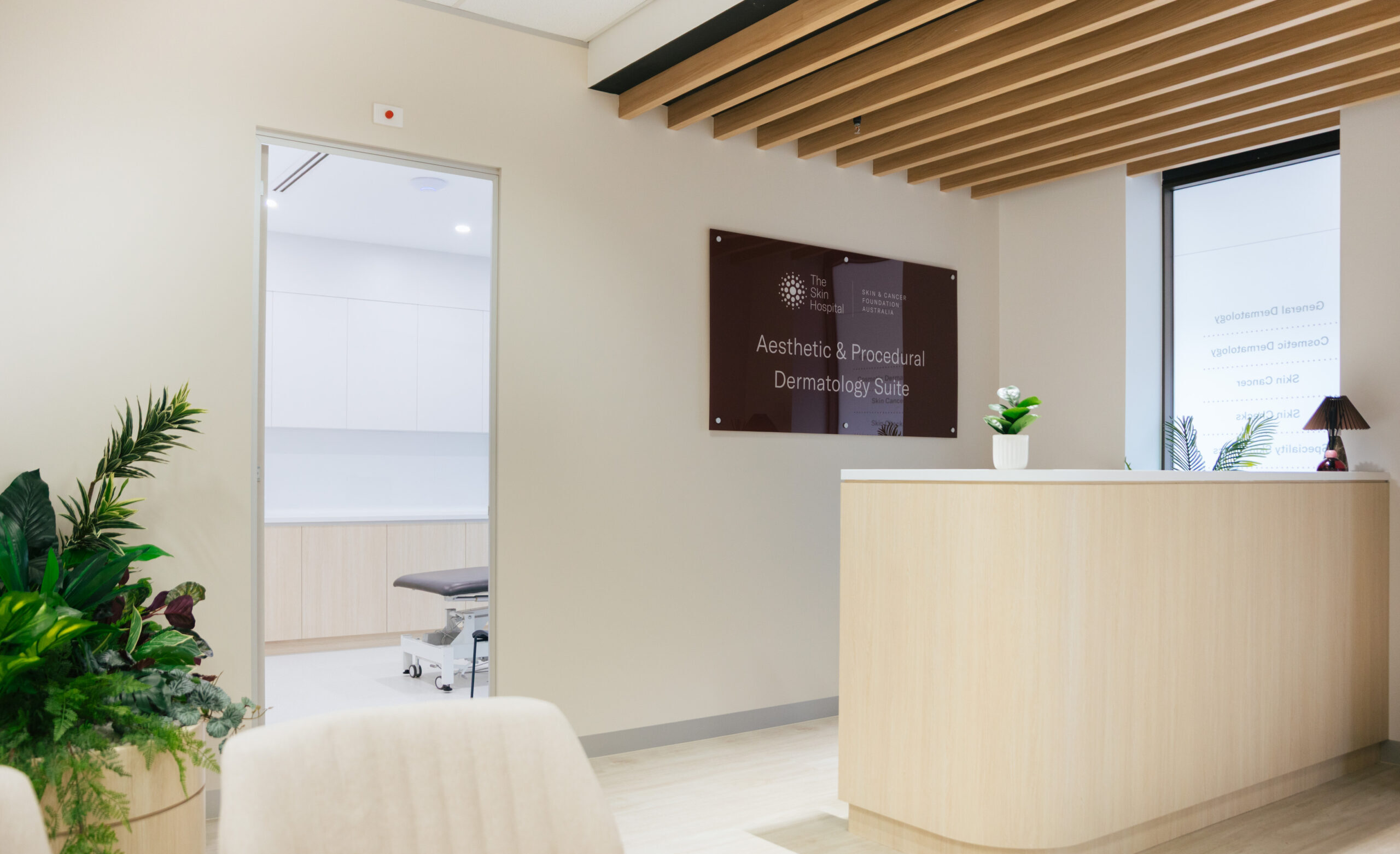
Our Aesthetics & Procedural Dermatology Suite at Darlinghurst brings together laser and light-based technologies, energy-based devices and evidence-based procedural treatments. All care is delivered by specialist dermatologists, dermatology nurses or our plastic surgeon, within a structured clinical framework and as an integrated part of a specialist dermatology hospital.
Our Team
Our specialist dermatologists are supported by highly trained dermatology nurses who run dedicated nurse-led clinics within the same structured clinical framework. Specialist dermatologists also run aesthetic and procedural lists, bringing surgical and procedural dermatology expertise within the same clinical environment. For patients considering surgical options, our plastic surgeon consults and operates on site, offering procedures including facelifts, neck lifts, eyelid surgery, rhinoplasty, lip lifts, hairline lowering, facial fat grafting and facial liposuction.
Your Consultation
Every consultation, whether you are an existing patient or coming to us for the first time, begins with a full clinical history. Your skin, your background and your concerns are assessed before any treatment is recommended.
Your consultation is with a specialist dermatologist with a focused clinical interest in laser, light-based and procedural treatments, or a plastic surgeon specialising in facial rejuvenation and refinement procedures, supported by a team of highly trained and experienced dermatology nurses.
Our aesthetic and procedural dermatologists and plastic surgeons work alongside their medical dermatology colleagues at The Skin Hospital to ensure continuity of care. Every consultation, whether you are an existing patient or coming to us for the first time, begins with a full clinical history. Your skin, your background and your concerns are assessed in full before any treatment is recommended.
Our plastic surgeon has a focused interest in facial rejuvenation and surgical refinement, encompassing procedures including facelifts, neck lifts, eyelid surgery, rhinoplasty, lip lifts, hairline lowering, facial fat grafting and facial liposuction.
Book your initial consultation below.
Have a question about our services or appointment process?
Submit an enquiry and our team will be in touch to assist with general information and booking support. Please note that medical advice, treatment recommendations and suitability assessments can only be provided during a formal consultation with one of our dermatologists or plastic surgeons.
We see patients across a wide range of concerns – from redness, pigmentation, scarring and sun damage, to the visible signs of ageing, and those considering surgical facial procedures.
Where a skin condition is already being managed by one of our dermatologists, aesthetic treatment is planned with that in mind. New patients presenting with an aesthetic concern are assessed with the same clinical rigour.
Every patient is seen as a whole. Their full skin health history informs every recommendation we make.
Pigmentation is one of the most frequently mistreated aesthetic skin concerns. The presentation – brown or grey patches, uneven skin tone, persistent dark marks — is often similar across different conditions. But the underlying cause, and therefore the appropriate treatment, varies significantly.
Melasma is a hormonally driven pigmentation disorder that affects the cheeks, forehead and upper lip. It is chronic, tends to recur with sun exposure and hormonal triggers, and can be worsened by certain lasers if applied without an accurate diagnosis. It requires a structured long-term management plan — not a single treatment session.
Post-inflammatory hyperpigmentation is the dark discolouration that follows acne, eczema or other inflammatory skin conditions. It is particularly common in patients with darker skin tones and requires the underlying condition to be well controlled before laser treatment is appropriate.
Solar lentigines — sunspots — are among the more predictably treatable forms of pigmentation. They are caused by cumulative UV exposure, are benign, and respond well to picosecond laser and IPL in suitable patients.
Dermoscopic assessment to confirm the type and depth of pigmentation is the starting point in every case. A laser applied to the wrong type of pigment does not simply fail to work — in some cases it makes the pigmentation worse. Getting the diagnosis right before selecting a treatment is not an optional step. It is where we start.
Facial redness is one of the most common and most undertreated skin concerns in Australia. For many patients it has been present for years — dismissed as sensitivity, managed with makeup, or treated superficially without addressing the underlying cause.
Rosacea is a chronic inflammatory condition that causes persistent central facial redness, visible blood vessels, and in some subtypes, papules and pustules that are frequently mistaken for acne. Left unmanaged, it tends to progress. The inflammatory component — which drives the flushing and the skin sensitivity — requires medical management. The vascular component — the persistent redness and broken capillaries — responds well to vascular laser and IPL when the diagnosis is accurate and the treatment is selected appropriately for the skin type and presentation.
Treating the vascular component with laser while the inflammatory component goes unmanaged produces a partial and often short-lived result. Managing both together, as part of a coordinated plan, produces a more complete and more durable outcome — in suitable patients.
Other presentations — facial flushing, telangiectasia, post-inflammatory redness and vascular birthmarks including port wine stains — each have distinct underlying mechanisms that determine how they should be approached. The assessment establishes which is present before any treatment is recommended.
Australia has one of the highest rates of skin cancer in the world, and the cumulative effects of UV exposure on the skin begin earlier than most patients realise. By the time sun damage is visible, as uneven pigmentation, roughened texture, fine lines and a dull complexion, the underlying structural changes to the skin have been accumulating for decades.
Sun damage exists on a spectrum. At the cosmetic end, it manifests as pigmentary and textural change that affects the appearance of the skin. Further along that spectrum sit actinic keratoses, rough, scaly patches that are pre-cancerous and require clinical treatment, not just aesthetic improvement. Left untreated, a proportion of actinic keratoses progress to squamous cell carcinoma.
Photodynamic therapy is one of the most clinically significant treatments available for sun-damaged skin. It addresses the pre-cancerous lesions and the cosmetic changes, the uneven tone, the surface texture, the fine lines, in the same treatment course. For patients with actinic keratoses, a Medicare rebate may apply. This is not an aesthetic treatment with a medical label attached, it is a medical treatment that also has meaningful aesthetic benefits, which is precisely why it sits within a specialist dermatology hospital rather than a cosmetic clinic.
For patients whose sun damage is primarily cosmetic, textural change, pigmentation, early photoageing, laser resurfacing, IPL and chemical peels address these concerns effectively in suitable patients, with treatment selection based on the extent of damage, skin type and treatment goals.
Scar assessment requires an understanding of scar morphology — the distinction between ice pick, rolling and boxcar acne scars, for example, directly determines which treatment modalities are likely to be effective. A treatment plan that does not account for scar subtype is unlikely to produce meaningful improvement.
We see patients with acne scarring, surgical and traumatic scars, hypertrophic scars and keloids, and scarring associated with previous skin procedures. For active acne, we work closely with our medical dermatology colleagues to ensure the underlying condition is well controlled before committing to scar treatment.
Treatment may involve laser resurfacing, energy-based devices, subcision, filler, or a combination of approaches, planned according to the individual’s scar pattern, skin type and history.
Facial ageing is a structural process. Volume is lost from the deep fat compartments, bone remodels, ligaments lengthen, and the overlying skin loses elasticity and thickness. Understanding this anatomy is fundamental to assessing what a patient is experiencing and what treatments are likely to address it meaningfully.
We approach ageing concerns with that anatomical framework in mind. For patients with concerns around skin quality, fine lines and texture, we offer laser resurfacing, energy-based skin tightening and evidence-based topical regimens. For volume loss and dynamic lines, treatment is considered in the context of the face as a whole rather than feature by feature.
Where the degree of change is beyond what non-surgical treatment can reliably address, we discuss that openly. Our plastic surgeon works within the same clinical environment and sees patients as part of the same care continuum, which allows for a frank and informed conversation about the full range of options available.
Some changes to the face and neck are structural in nature and are most appropriately addressed surgically. Our plastic surgeon has a focused interest in facial rejuvenation and surgical refinement, consulting and operating on site as part of our integrated clinical team.
Procedures offered include facelift and deep plane neck lift, deep neck reduction, blepharoplasty, rhinoplasty, lip lift, hairline lowering, facial fat grafting and submental liposuction. Surgical consultations follow the same approach as all consultations at The Skin Hospital – beginning with a full clinical history and a thorough assessment of the patient’s concerns, anatomy and expectations, before any procedure is discussed.
Acne is the most common skin condition we treat, and one of the most consequential when it comes to long-term skin health. It is a medical condition driven by sebaceous gland activity, follicular obstruction and bacterial colonisation. It causes not just active breakouts but, in many patients, persistent scarring and post-inflammatory pigmentation that remains long after the acne itself has settled.
Treating acne scarring while active acne remains uncontrolled produces a limited result, the ongoing disease process continues to damage the skin as the scarring is being addressed. Our dermatologists manage both. The acne is controlled medically first, using evidence-based prescription therapy where indicated. Once the skin is stable, scarring is addressed using fractional laser, radiofrequency microneedling, skin needling or a combination of approaches depending on the scar type, skin phototype and treatment history.
Beyond acne, we address skin laxity, the gradual loss of dermal firmness that accompanies both chronological ageing and photoageing, using radiofrequency-based treatments that stimulate collagen remodelling in the dermis. Body contouring with EMSculpt Neo and tattoo removal with picosecond laser are also available, assessed and managed on clinical grounds in the same way as every other treatment in the program.
The treatments available in our Aesthetic & Procedural Dermatology Suite span laser and light-based technologies, energy-based devices and procedural techniques, selected on the basis of their evidence base and their clinical appropriateness for the skin concerns we treat most.
Every treatment recommended at The Skin Hospital follows a full dermatologist consultation. The technology used is determined by the diagnosis, the skin type and the individual patient’s clinical history, not by a standard menu. Some treatments address purely aesthetic concerns. Others sit at the intersection of medical and aesthetic dermatology.
All treatments are performed by, or under the direct supervision of, a specialist dermatologist.
A laser treatment for acne that targets the oil-producing glands in the skin.
Accure is a 1726nm wavelength laser specifically designed to target sebaceous glands, the oil-producing glands in the skin that play a central role in acne pathogenesis. It is one of the few laser technologies with a mechanism of action directed at the underlying cause of acne rather than its surface manifestations.
The laser energy is absorbed selectively by sebaceous glands, reducing their activity and the amount of sebum they produce. By reducing sebum production, Accure addresses one of the key drivers of acne — excess oil that contributes to follicular obstruction and the conditions in which acne-causing bacteria thrive.
Accure is used for the treatment of moderate to severe acne in suitable patients. It is most effective when used as part of a broader dermatologist-supervised management plan that addresses the inflammatory and bacterial components of acne alongside the sebaceous component. It is not a standalone replacement for medical acne therapy in patients with active inflammatory disease.
Most patients experience mild redness and warmth in the treated area during and immediately after treatment, which typically resolves within a day or two. A course of treatments is recommended, individual sessions are not sufficient to produce the full clinical effect. Your dermatologist will advise on the number of sessions appropriate for your presentation.
A versatile light-based treatment for pigmentation, redness and skin rejuvenation.
BBL (BroadBand Light) is an advanced form of intense pulsed light (IPL) technology that uses broad-spectrum light energy to address a range of skin concerns. BBL delivers precise pulses of light across a broad range of wavelengths, which can be filtered and adjusted to target specific chromophores — the pigments and structures in the skin that absorb light energy.
BBL works by delivering light energy that is absorbed selectively by the target — melanin in the case of pigmentation, oxyhaemoglobin in blood vessels in the case of redness and vascular concerns. The absorbed energy causes controlled damage to the targeted cells or structures, stimulating the skin’s natural repair processes. Collagen production is also stimulated, contributing to improvement in skin texture and quality over time.
BBL is used for the treatment of pigmentation including solar lentigines, freckles and diffuse skin discolouration; redness and vascular concerns including rosacea-associated redness and broken capillaries; sun damage and photoageing; and general skin rejuvenation. It is not appropriate for all skin types — in particular, it requires careful assessment and adjusted parameters in patients with darker skin tones. Your dermatologist will assess suitability at consultation.
Most patients experience mild redness and some superficial darkening of pigmented lesions in the days following treatment, which resolves over one to two weeks. A course of treatments is generally recommended for optimal results. Individual responses vary and a single session is unlikely to produce the full effect.
A chemical peel involves the application of a chemical solution to the skin that causes controlled exfoliation of the outer layers — removing damaged, pigmented or irregular surface cells and stimulating the production of new, healthier skin. Medical-grade peels used in a dermatology setting differ from cosmetic peels in the concentration and formulation of the active agents, and in the depth of penetration achievable.
The active agents in a chemical peel — which may include alpha hydroxy acids, trichloroacetic acid (TCA), salicylic acid or other compounds depending on the formulation — disrupt the bonds between skin cells in the targeted layer, causing controlled shedding. As the skin heals, cell turnover is accelerated, surface pigmentation is reduced, and collagen remodelling is stimulated in the dermis. The depth of the peel — superficial, medium or deep — determines the extent of these effects and the downtime involved.
Chemical peels are used for the treatment of pigmentation including melasma, post-inflammatory hyperpigmentation and solar lentigines; sun damage and photoageing; acne and acne-related skin texture; fine lines; and general improvement in skin tone and surface quality. The formulation and depth of peel selected is based on your skin type, skin phototype, the specific concern being treated and your tolerance for downtime.
Superficial peels involve mild redness and flaking for two to five days with minimal disruption to daily activities. Medium-depth peels involve more significant redness, swelling and peeling for five to seven days. Deep peels involve a more extended healing period and are used selectively. Your dermatologist will discuss the appropriate peel depth and what to expect at your consultation.
A non-surgical body contouring treatment that simultaneously builds muscle and reduces fat.
EMSculpt Neo is a non-invasive body contouring device that combines two forms of energy — high-intensity focused electromagnetic energy (HIFEM) and radiofrequency (RF) — delivered simultaneously in a single treatment session. It is the only device that addresses both muscle and fat in one treatment.
The HIFEM component induces supramaximal muscle contractions — contractions of a frequency and intensity that cannot be achieved through voluntary exercise. These contractions stimulate muscle fibre remodelling and growth. The RF component raises the temperature in the subcutaneous fat layer, causing lipolysis — the breakdown of fat cells — which are then cleared by the body’s natural metabolic processes over the weeks following treatment.
EMSculpt Neo is used for non-surgical body contouring — specifically for the reduction of suprafascial fat and the building of muscle in treated areas. Common treatment areas include the abdomen, buttocks, thighs and arms. It is a cosmetic body treatment — it is not a weight-loss treatment and is not appropriate as a substitute for lifestyle-based management of obesity or metabolic disease. Suitability is assessed at consultation.
EMSculpt Neo requires no downtime. Most patients describe the sensation during treatment as intense muscle contractions with warmth. Some muscle soreness similar to post-exercise soreness may occur in the days following treatment. Results develop gradually over several weeks following the treatment course as the muscle remodelling and fat clearance processes occur. A standard course of four sessions is typical. Maintenance sessions may be required to sustain results.
An ablative laser for skin resurfacing, targeting sun damage, photoageing and scarring.
Erbium laser (Er:YAG) is an ablative laser that emits light at a wavelength of 2940nm — a wavelength that is highly absorbed by water in skin cells. This precise absorption profile allows the erbium laser to remove thin layers of skin tissue with minimal collateral thermal damage to surrounding structures, making it a controlled and precise resurfacing tool.
The laser energy vaporises the outer layers of damaged skin, removing surface irregularities, pigmentation and scarred tissue. The controlled thermal injury stimulates the skin’s healing response — new collagen is produced in the dermis, and the skin resurfaces with improved texture, tone and surface quality. The depth of treatment is calibrated by the dermatologist based on the extent of damage and the clinical goals.
Erbium laser is used for the treatment of sun damage and photoageing — including fine lines, uneven skin tone and surface roughness; acne scarring; and the removal of certain benign skin lesions. It is particularly well-suited to patients seeking meaningful improvement in sun-damaged or photoaged skin and who are able to accommodate the associated downtime.
Downtime following erbium laser resurfacing is significant and should be planned for. Treated skin will be red, raw and weeping for several days, transitioning to crusting and peeling over seven to fourteen days depending on the depth of treatment. Full redness may persist for several weeks. Pre-treatment and aftercare protocols are provided in detail at consultation. Sun protection is essential during and after the recovery period.
A resurfacing treatment that targets a fraction of the skin at a time, stimulating collagen renewal.
Fractional laser technology delivers laser energy in a grid of microscopic treatment zones across the skin surface, leaving the tissue between each zone intact. This fractional approach treats a portion of the skin at each session while preserving surrounding tissue — allowing the skin to heal more rapidly than fully ablative resurfacing, while still stimulating meaningful collagen remodelling.
The laser energy creates controlled micro-injuries in the treated zones, penetrating to a defined depth in the dermis. These micro-injuries stimulate the production of new collagen and elastin as the skin repairs itself. Surface pigmentation and damaged tissue in the treated zones is shed, and new, remodelled skin forms over the following weeks. The density and depth of treatment are adjusted by the dermatologist based on the clinical goals and the patient’s skin type and phototype.
Fractional laser is used for the treatment of acne scarring — including atrophic scars such as ice pick, boxcar and rolling variants; sun damage and photoageing including fine lines, uneven texture and pigmentation; and skin rejuvenation. It is one of the most versatile resurfacing modalities available and can be calibrated across a wide range of treatment intensities to match the patient’s downtime tolerance and clinical goals.
Downtime following fractional laser treatment varies depending on the intensity of the session. Lower-intensity treatments involve two to four days of redness and mild swelling. Higher-intensity sessions may involve five to seven days of more significant redness, swelling and peeling. Results develop gradually over three to six months as new collagen forms. A course of treatments is typically recommended for optimal results.
A hybrid laser combining two wavelengths to address both surface and deeper skin concerns in one treatment.
The Halo laser is a hybrid fractional laser that delivers two wavelengths simultaneously — an ablative 2940nm erbium wavelength and a non-ablative 1470nm wavelength — in a single treatment pass. This combination allows the Halo to address both the surface changes of photoageing and pigmentation and the deeper dermal changes associated with sun damage and collagen loss, in a single session.
The ablative wavelength removes the outermost layers of damaged skin, addressing surface pigmentation, uneven texture and fine lines. The non-ablative wavelength penetrates to a deeper level in the dermis, stimulating collagen remodelling without removing the overlying tissue. The combination of both effects in a single treatment produces a more comprehensive result than either wavelength alone, with a balance of efficacy and recovery time that makes it well-suited to patients who want meaningful improvement without the extended downtime of fully ablative resurfacing.
Halo is used for the treatment of sun damage and photoageing — including uneven pigmentation, surface roughness, enlarged pores and fine lines; solar lentigines; melasma in suitable patients; and general improvement in skin tone and texture. It is one of the most effective single-session options for diffuse photodamage.
Most patients experience three to five days of bronzed, roughened skin as the treated surface cells shed, followed by a further period of mild redness. The initial bronzing phase — during which dead cells peel — is expected and is part of the normal treatment response. Most patients are able to resume normal activities within five to seven days with appropriate aftercare. Full results develop over three months as collagen remodelling occurs.
A multi-step skin treatment combining deep cleansing, exfoliation and hydration.
Hydrodermabrasion is a non-invasive skin treatment that combines physical exfoliation with simultaneous infusion of hydrating and nourishing serums into the skin. Unlike traditional microdermabrasion, which uses abrasive crystals or a diamond-tipped handpiece alone, hydrodermabrasion delivers active ingredients directly to the skin during the exfoliation process.
The treatment uses a specialised handpiece that simultaneously exfoliates the outer layer of the skin and delivers a customised serum solution. The exfoliation removes dead skin cells, clears pores and improves surface texture, while the concurrent infusion of serums — which may include hyaluronic acid, antioxidants or other active ingredients — hydrates and nourishes the newly exposed skin.
Hydrodermabrasion is used to improve skin hydration, surface texture and tone; reduce the appearance of enlarged pores; and address mild superficial pigmentation. It is a maintenance and skin health treatment rather than a primary therapeutic intervention for significant skin conditions. It is appropriate for a wide range of skin types and can be incorporated into a regular skin health programme.
There is no downtime associated with hydrodermabrasion. Some temporary redness may occur immediately after treatment, typically resolving within a few hours. Patients can resume normal activities immediately. Results are incremental and are best maintained with regular treatment sessions.
A light-based treatment for pigmentation, redness, sun damage and skin rejuvenation.
Intense Pulsed Light (IPL) uses broad-spectrum light energy across a range of wavelengths to treat a variety of skin concerns. Unlike a laser, which emits light at a single wavelength, IPL delivers multiple wavelengths simultaneously, which can be filtered to target specific chromophores in the skin — melanin in pigmented lesions, or oxyhaemoglobin in blood vessels.
IPL delivers pulses of light energy to the skin, which is absorbed by the target chromophore — the pigment or vascular structure being treated. The absorbed energy causes selective damage to the target, stimulating the body’s natural clearing and repair processes. Melanin-containing cells are disrupted and cleared, reducing the appearance of pigmentation. Targeted blood vessels are damaged and absorbed, reducing redness and visible capillaries. Collagen production is also stimulated over time.
IPL is used for the treatment of pigmentation including solar lentigines, freckles and diffuse skin discolouration; vascular concerns including rosacea-associated redness and broken capillaries; sun damage and photoageing; and general skin rejuvenation. IPL is not appropriate for all skin types — it requires careful assessment in patients with darker skin tones, where the risk of pigmentary side effects is increased. Suitability is assessed at consultation.
Most patients experience mild redness and some temporary darkening of pigmented lesions in the days following treatment. Pigmented lesions typically darken, crust and shed over seven to fourteen days — this is the expected treatment response, not a complication. A course of treatments is generally recommended. Individual responses vary.
A non-invasive treatment using specific wavelengths of light to support skin health.
LED (Light Emitting Diode) light therapy delivers specific wavelengths of light to the skin to stimulate cellular processes. Different wavelengths have different biological effects — red light (typically 630–660nm) stimulates fibroblast activity and collagen production; near-infrared light penetrates more deeply and supports tissue repair; blue light (415nm) targets Cutibacterium acnes bacteria in acne-prone skin.
LED light therapy works through a process called photobiomodulation — the absorption of specific wavelengths of light by cellular chromophores, which stimulates intracellular signalling pathways. Red and near-infrared wavelengths stimulate mitochondrial activity and fibroblast proliferation, supporting collagen synthesis and skin repair. Blue light generates reactive oxygen species that are selectively toxic to acne-causing bacteria.
LED light therapy is used as an adjunctive treatment for skin rejuvenation — supporting collagen production and improving skin quality; post-procedure recovery — reducing inflammation and supporting healing after more intensive treatments; and acne management — where blue light is used alongside other acne therapies. LED is a low-risk, non-invasive treatment typically used in conjunction with other treatments rather than as a primary standalone intervention for significant skin conditions.
LED light therapy involves no downtime. Sessions are comfortable — patients experience mild warmth during treatment. Multiple sessions are required to achieve and maintain the clinical effect. LED is typically incorporated into a broader treatment plan rather than used as a standalone treatment course.
A versatile laser platform used for vascular lesions, pigmentation and skin rejuvenation.
Nd:YAG (Neodymium-doped Yttrium Aluminium Garnet) laser emits light at 1064nm — a wavelength that penetrates more deeply into the skin than many other laser wavelengths, making it effective for deeper vascular structures and pigmentation that sits below the skin surface. It is available in both long-pulsed and short-pulsed configurations, which have different clinical applications.
The 1064nm wavelength is absorbed by oxyhaemoglobin in blood vessels and by melanin in pigmented structures. Long-pulsed Nd:YAG delivers energy over a longer pulse duration, targeting larger or deeper vascular structures with a more gradual thermal effect. Short-pulsed (Q-switched) Nd:YAG delivers energy in very brief, high-intensity pulses that shatter pigment particles into smaller fragments for clearance by the immune system. The specific configuration used depends on the indication.
Long-pulsed Nd:YAG is used for the treatment of deeper vascular lesions including leg veins, deeper facial blood vessels and some types of vascular birthmarks; and for laser hair reduction in suitable patients. Short-pulsed (Q-switched) Nd:YAG is used for pigmentation treatment and tattoo removal. The appropriate configuration for your specific concern is determined at consultation.
Downtime varies depending on the application and the intensity of treatment. Vascular treatments typically involve redness and mild bruising for several days. Pigmentation treatments may involve temporary darkening of treated lesions. Tattoo removal sessions are associated with transient whitening of the treated area, followed by redness and mild swelling for a few days. Multiple sessions are required for all indications.
A treatment that uses a light-activated agent to treat pre-cancerous sun damage and improve photoaged skin.
Photodynamic therapy (PDT) involves the application of a topical photosensitising agent — a light-activated medication — to the skin. The agent is absorbed preferentially by rapidly dividing and metabolically active cells, including pre-cancerous cells such as actinic keratoses. After an incubation period during which the agent accumulates in the target cells, the skin is exposed to a specific activating light source.
When the activating light reaches the photosensitising agent in the treated cells, a photochemical reaction is triggered that produces reactive oxygen species — molecules that are selectively toxic to the abnormal cells. This causes destruction of the targeted cells while largely sparing the surrounding normal skin. The treatment also stimulates dermal remodelling, improving skin texture, tone and surface quality as part of the healing process.
PDT is used for the treatment of actinic keratoses — pre-cancerous lesions caused by cumulative UV damage that require clinical treatment. It is one of the most effective field treatments available for patients with multiple actinic keratoses across a broad area such as the face, scalp, forearms or hands. PDT also addresses the cosmetic changes of photoaged skin — pigmentation, texture irregularity and fine lines — in the same treatment course. A Medicare rebate may apply for the treatment of actinic keratoses in eligible patients. Your dermatologist will advise on eligibility.
PDT is associated with significant downtime that must be planned for. Redness, swelling, crusting and peeling are expected in the days following treatment — typically peaking at days two to four and resolving over one to two weeks. The extent of the reaction tends to reflect the degree of sun damage present and is a normal part of the treatment response. Patients must strictly avoid sunlight and bright indoor light for 48 hours following treatment. Full pre-treatment and aftercare instructions are provided at consultation.
An advanced laser that delivers ultra-short energy pulses to fragment pigment with precision.
Picosecond laser technology delivers laser energy in extremely brief pulses measured in picoseconds — one trillionth of a second. This ultra-short pulse duration produces a photoacoustic (pressure-based) effect on pigment particles, fragmenting them into smaller pieces without the thermal effect that characterises longer-pulsed laser technologies. The result is more effective pigment clearance with a reduced risk of heat-related side effects.
The ultra-short pulses create an intense photoacoustic shockwave within melanin-containing cells and tattoo ink particles, shattering the pigment into microscopic fragments. These fragments are recognised by the immune system as foreign material and are cleared gradually over the weeks following treatment. Because the mechanism is predominantly photoacoustic rather than photothermal, the risk of post-treatment hyperpigmentation — which is a concern with older nanosecond lasers — is reduced, making picosecond technology better suited to patients with darker skin tones in appropriate cases.
Picosecond laser is used for the treatment of pigmentation including solar lentigines, freckles, post-inflammatory hyperpigmentation and some presentations of melasma in suitable patients; and for tattoo removal. It is one of the most versatile and evidence-supported laser platforms for pigmentation management across a range of skin phototypes.
Most patients experience mild redness and swelling immediately after treatment, resolving within a day or two. Treated pigmented lesions may initially appear darker before clearing over subsequent weeks. Multiple sessions are required for all indications — the number depends on the type and depth of pigmentation or the size, colour and depth of the tattoo. Complete clearance of tattoos cannot be guaranteed.
A treatment that uses the body’s own growth factors to support tissue repair, skin rejuvenation and hair restoration.
Platelet-Rich Plasma (PRP) is a preparation derived from the patient’s own blood. A small blood sample is drawn and centrifuged to isolate and concentrate the platelets, separating them from other blood components. The resulting platelet-rich preparation contains a high concentration of growth factors that play a key role in tissue repair and regeneration. When reintroduced to the treatment area, these growth factors may stimulate collagen production, tissue remodelling, and cellular renewal.
Platelets are a natural component of blood involved in wound healing and tissue repair. When concentrated and delivered to a targeted area, the growth factors released by activated platelets — including platelet-derived growth factor (PDGF), transforming growth factor (TGF), and vascular endothelial growth factor (VEGF) — interact with local cells to stimulate collagen synthesis, neovascularisation, and tissue regeneration. PRP can be administered via injection or microneedling, depending on the indication and treatment area.
PRP may be considered for skin rejuvenation, including improvements in skin texture, tone, and quality, and in the management of fine lines and early skin laxity. It may also be used in the management of acne scarring and certain types of hyperpigmentation. In the context of hair loss, PRP may be considered for androgenetic alopecia and other forms of hair thinning, with the aim of supporting follicle health and stimulating hair growth. PRP is not a standalone solution for significant skin laxity or advanced hair loss, and a thorough clinical assessment is required to determine suitability.
Downtime is generally minimal. Mild redness, swelling, and bruising at the injection or treatment site are common and typically resolve within one to three days. A course of treatments is usually recommended, with results developing gradually over several weeks to months as the biological response progresses. Individual outcomes vary depending on the patient’s skin condition, health status, and treatment indication. Maintenance sessions may be required.
Energy-based treatments that use radiofrequency to stimulate collagen and improve skin quality.
Radiofrequency (RF) treatments deliver controlled electrical energy to the dermis, generating heat within the tissue. This thermal effect stimulates fibroblast activity and collagen remodelling, improving skin firmness, texture and quality over time. RF is available in several configurations — monopolar, bipolar and fractional — each with different depth of penetration and clinical applications.
RF energy passes through the skin and generates heat within the dermis by creating resistance in the tissue. The controlled heating of dermal collagen causes immediate collagen contraction and, over the following weeks to months, stimulates the production of new collagen and elastin. Monopolar RF penetrates most deeply and is used for skin laxity. Bipolar RF is more superficial and is used for surface skin quality. Fractional RF devices such as Venus Viva deliver RF through a matrix of micro-pins or electrodes, creating precise treatment zones in the dermis.
RF treatments are used for the improvement of skin laxity — particularly in the lower face, jowl and neck; skin texture and enlarged pores; acne scarring; and general skin rejuvenation. They are most appropriate for patients with mild to moderate skin laxity — RF is not equivalent to surgical intervention and is not appropriate for patients with significant skin excess or laxity that would benefit from surgical management.
Downtime varies by device and treatment intensity. Monopolar RF and Venus Viva treatments involve one to three days of redness and mild swelling. A course of treatments is recommended for all indications — results develop gradually over three to six months as new collagen forms. Maintenance sessions may be required.
A fractional radiofrequency microneedling treatment for acne scarring, skin texture and laxity.
Secret RF is a fractional radiofrequency microneedling device that combines two mechanisms of action in a single treatment: physical microneedling and radiofrequency energy delivery into the dermis. It delivers RF energy through an array of insulated microneedles at a precise, controlled depth, producing targeted heating of the dermis while minimising the effect on the overlying epidermis.
The insulated microneedles penetrate to a defined depth in the dermis and deliver RF energy at the needle tip — concentrating the thermal effect precisely where collagen remodelling is needed. The physical needling also creates controlled microchannels that stimulate the skin’s natural wound-healing response. The combined effect of RF-induced thermal injury and physical microneedling produces more significant collagen and elastin remodelling than either modality alone.
Secret RF is used for the treatment of acne scarring — including atrophic scars such as ice pick, boxcar and rolling variants; skin texture irregularity and enlarged pores; mild skin laxity; and general skin quality improvement. It is one of the most effective treatments available for acne scarring in a range of skin phototypes, including darker skin tones, because the insulated needle design minimises the risk of epidermal pigmentary changes.
Most patients experience one to three days of redness and mild swelling after each session. A topical anaesthetic cream is applied before treatment to minimise discomfort. A course of three to four sessions is typically recommended, with sessions spaced four to six weeks apart. Results develop gradually over three to six months as new collagen forms.
A collagen-stimulating treatment using controlled micro-needling to improve skin texture and scarring.
Skin needling — performed using a Dermapen motorised micro-needling device — creates thousands of microscopic punctures in the skin at a controlled depth. These micro-injuries are designed to stimulate the skin’s natural wound-healing response, including the production of new collagen and elastin, without causing visible surface damage.
The Dermapen device uses a series of fine needles that oscillate rapidly, creating controlled micro-channels in the skin at a precise depth set by the treating clinician. The micro-injuries trigger an inflammatory healing response — fibroblasts migrate to the treatment area and produce new collagen and elastin as part of the repair process. Over time, this leads to improvement in skin texture, firmness and the appearance of scarring.
Skin needling is used for the treatment of acne scarring — including shallow atrophic scars; skin texture irregularity and enlarged pores; mild pigmentation including post-inflammatory hyperpigmentation; and general skin quality improvement. It is associated with a lower risk of post-inflammatory hyperpigmentation compared with some laser treatments, making it well-suited to patients with darker skin tones.
Most patients experience two to four days of redness and mild swelling after each session, which can typically be covered with makeup after 24 hours. A course of three to six sessions is recommended, spaced four to six weeks apart. Results develop over several weeks to months as new collagen forms.
The gold-standard vascular laser for rosacea, broken capillaries, port wine stains and vascular lesions.
The Vbeam Perfecta is a pulsed dye laser (PDL) that emits light at 595nm — a wavelength that is selectively absorbed by oxyhaemoglobin, the pigment in red blood cells. This selective absorption allows the Vbeam to target blood vessels with precision while minimising damage to the surrounding skin. It is one of the most extensively studied and evidence-supported laser platforms for the treatment of vascular skin conditions.
The 595nm wavelength is absorbed by oxyhaemoglobin in the target blood vessel, converting to heat. This heating causes coagulation of the vessel wall, leading to its gradual absorption and clearance by the body. The Vbeam Perfecta incorporates a dynamic cooling device (DCD) — a cryogen spray that cools the epidermis immediately before and after each laser pulse — which reduces discomfort and minimises the risk of epidermal damage, allowing higher fluences to be used safely.
Vbeam Perfecta is used for the treatment of rosacea-associated redness and telangiectasia — including persistent central facial redness and visible broken capillaries; port wine stains and other vascular birthmarks; spider naevi and cherry angiomas; post-inflammatory erythema; and some presentations of acne-related redness. For redness and telangiectasia, two to three sessions are typically required. Port wine stains and more complex vascular conditions often require more sessions — the exact number depends on the extent and type of the lesion.
Most patients experience redness and mild swelling for several days after treatment. Purpura — temporary bruising of the treated skin — is a common and expected response at higher treatment settings, typically resolving over seven to fourteen days. Ice packs and gentle aftercare are recommended. Sun protection is essential. Individual responses vary and multiple sessions are typically required.
The surgical procedures available through our Aesthetic & Procedural Dermatology Suite are performed by our plastic surgeon, who consults and operates on site as an integrated part of the clinical team at The Skin Hospital.
Every surgical consultation begins with a full assessment of the patient’s anatomy, concerns and medical history. The procedure recommended — if any — is determined by what is clinically appropriate for that individual, not by a standard offering. Some patients are best served by surgery alone. Others by a combination of surgical and non-surgical approaches, planned together across the team. And for some, the most appropriate recommendation is that surgery is not indicated at this time.
Operating within a specialist dermatology hospital means that patients with concurrent skin conditions – whether active rosacea, significant sun damage, a history of skin cancer or a tendency to scar poorly – can have those factors considered and managed as part of their surgical planning, without having to navigate separate providers.
Surgical repositioning of the face and neck to address soft tissue descent, jowling and neck laxity.
What is it?
A facelift is a surgical procedure that addresses the structural changes of facial ageing — the descent of soft tissue, deepening of facial folds, jowling and loss of jawline and neck definition. The deep plane technique operates beneath the superficial musculoaponeurotic system (SMAS), repositioning the deeper structural supports of the face rather than tightening skin alone. This approach addresses the foundational anatomy of facial descent and is selected based on each patient’s individual anatomy and degree of change.
How does it work?
Incisions are placed in the hairline and around the ear, allowing access to the deeper facial and neck structures. The SMAS and underlying tissues are repositioned, excess skin is removed and the incisions are closed. A deep plane neck lift addresses the platysma and deeper neck structures simultaneously. The procedure is performed under general anaesthetic and typically requires an overnight stay.
What is it used for?
Facelift surgery is considered in patients with significant soft tissue descent, jowling, deepening of the nasolabial folds, loss of jawline definition and neck laxity that is structural in nature and not amenable to non-surgical approaches. Patient selection is based on a thorough assessment of facial anatomy, degree of change and individual clinical history.
Downtime and what to expect
Recovery following facelift surgery requires planning. Swelling, bruising and tightness are expected in the initial weeks. Most patients take two to three weeks away from work and social commitments. Sutures are removed at one to two weeks. Residual swelling can persist for several months. Pre-operative and post-operative care instructions are provided in detail at consultation.
Surgical treatment of the neck addressing subplatysmal fat, platysmal banding and loss of cervicomental definition.
What is it?
Deep neck reduction is a surgical procedure addressing changes beneath the platysma muscle — the thin sheet of muscle that spans the front of the neck. Subplatysmal fat deposits, platysmal banding and the overall contour of the cervicomental angle can contribute significantly to the appearance of the neck and are not addressable by surface treatments or liposuction alone. Deep neck reduction is considered when a thorough anatomical assessment identifies subplatysmal change as a primary contributing factor.
How does it work?
Access is typically made through a small incision beneath the chin. Subplatysmal fat is addressed directly, and the platysma is modified as required to restore neck contour. The procedure may be performed in isolation or in conjunction with a neck or facelift, depending on the patient’s anatomy and the extent of change present.
What is it used for?
Deep neck reduction is indicated in patients where standard neck lifting or liposuction would not adequately address the underlying anatomical changes. It is particularly relevant in patients with significant subplatysmal fat, prominent platysmal bands or a poorly defined cervicomental angle. Suitability is determined following full clinical assessment.
Downtime and what to expect
Swelling and bruising of the neck are expected following surgery and typically resolve over two to three weeks. A compression garment is worn during the early recovery period. Full resolution of swelling takes several months. Detailed post-operative instructions are provided at consultation.
Surgical treatment of the upper and lower eyelids addressing excess skin, herniated fat and changes to eyelid contour.
What is it?
Blepharoplasty is a surgical procedure addressing structural changes to the eyelids that develop with age. Upper eyelid blepharoplasty removes excess skin and, where appropriate, herniated orbital fat from the upper eyelid. Lower eyelid blepharoplasty addresses under-eye puffiness caused by herniated fat, excess skin laxity and hollowing of the lower eyelid and tear trough. Upper and lower eyelid procedures may be performed independently or together, depending on the patient’s anatomy.
How does it work?
Upper eyelid incisions are placed in the natural eyelid crease, making resulting scars difficult to detect. Lower eyelid surgery may be approached through an incision just below the lower lash line or, for patients requiring fat repositioning without skin removal, through an incision inside the lower eyelid. The procedure is performed under local anaesthesia with sedation or general anaesthetic depending on the extent of surgery.
What is it used for?
Blepharoplasty is considered in patients with excess upper eyelid skin, upper eyelid heaviness, under-eye puffiness, lower eyelid skin laxity or a combination of these concerns. Where upper eyelid skin excess is affecting the visual field, a functional indication may exist alongside the aesthetic one. All patients undergo a full assessment of eyelid anatomy and skin health prior to any surgical recommendation.
Downtime and what to expect
Bruising and swelling around the eyes are expected following blepharoplasty and typically resolve over ten to fourteen days. Sutures are removed at approximately one week. Patients should plan to avoid strenuous activity for two weeks. Final results take several months to fully consolidate as residual swelling settles.
Surgical assessment and treatment of nasal shape, proportion and structure.
What is it?
Rhinoplasty is a surgical procedure addressing the structure, shape and proportion of the nose. It is among the more technically complex procedures in facial surgery, requiring a detailed understanding of nasal anatomy — the relationship between the skin envelope, cartilage framework and underlying bone — and how changes to one component affect the others. It may be performed as an open procedure, with a small incision across the columella, or closed, with incisions placed entirely inside the nose, depending on the degree of change required.
How does it work?
The nasal framework is accessed and modified through reshaping, repositioning or augmenting the cartilage and bone structures. In some patients, cartilage grafting using tissue from the ear or rib is required to provide structural support or augmentation. The skin envelope redrapes over the modified framework as healing progresses over the months following surgery.
What is it used for?
Rhinoplasty is considered in patients with concerns relating to nasal size, shape, tip projection or definition, dorsal profile, nostril shape or asymmetry. It may also address a deviated septum where this is contributing to both aesthetic and functional concerns. Consultation involves a detailed assessment of the nasal structure and a frank discussion of what surgical change can and cannot achieve in the context of each patient’s individual anatomy.
Downtime and what to expect
A splint is worn over the nose for approximately one week following surgery. Significant swelling and bruising are expected in the first two weeks. While the majority of swelling resolves within the first few months, final nasal shape continues to refine for up to twelve months or longer, particularly at the nasal tip. Patients are counselled in detail about the recovery process and timeline at consultation.
A surgical procedure that modifies the proportion and position of the upper lip by shortening the distance between the nose and the lip border.
What is it?
A lip lift is a surgical procedure that addresses the distance between the base of the nose and the upper lip border — a measurement known as the philtrum length. With age, this distance tends to increase as the lip descends, reducing upper lip show and altering the proportions of the lower face. A lip lift shortens the philtrum, modifies upper lip position and proportion, and is considered where non-surgical approaches are not appropriate or have not been sufficient.
How does it work?
A small amount of skin is removed from beneath the base of the nose, and the upper lip is advanced upward and secured. The incision is placed at the natural junction between the nose and lip, where the resulting scar is well concealed as healing progresses. The procedure is performed under local anaesthesia and is typically completed as a day procedure.
What is it used for?
A lip lift is considered in patients where philtrum lengthening is a primary concern, where upper lip show has reduced significantly with age, or where injectable approaches to lip proportion have not achieved the desired change. Suitability is assessed in the context of the patient’s overall facial proportions and anatomy.
Downtime and what to expect
Swelling and bruising are expected following surgery and typically resolve over one to two weeks. The incision line matures over several months. Patients are advised to avoid strenuous activity in the initial recovery period. Detailed aftercare instructions are provided at consultation.
Surgical advancement of the anterior hairline to address a high or disproportionate forehead.
What is it?
Hairline lowering surgery, also referred to as forehead reduction or HALO surgery, is a procedure that surgically advances the anterior hairline to reduce the vertical height of the forehead. It is considered in patients where the forehead is disproportionately high relative to the rest of the face and where non-surgical approaches are not appropriate. Suitability depends on several anatomical factors including scalp laxity, hair density at the hairline and the degree of advancement required, all of which are assessed at consultation.
How does it work?
An incision is made at or just behind the anterior hairline, allowing the scalp to be advanced forward and the excess forehead skin to be removed. The incision is designed to follow the natural hairline contour, and hair follicles at the hairline edge assist in concealing the resulting scar as healing progresses. The procedure is performed under general anaesthetic or local anaesthesia with sedation.
What is it used for?
Hairline lowering is considered in patients who are concerned about forehead height or proportion and in whom scalp laxity is sufficient to allow safe advancement. It may be performed in isolation or in conjunction with brow lifting procedures depending on the patient’s anatomy and concerns.
Downtime and what to expect
Swelling and numbness of the forehead and scalp are common following surgery and resolve progressively over several weeks. The incision line matures over several months, during which time the scar continues to fade. Patients are advised to avoid strenuous activity for two to three weeks. Full recovery instructions are provided at consultation.
Transfer of the patient’s own fat to address volume loss in the face.
What is it?
Facial fat grafting uses your own fat — harvested from elsewhere on the body — to restore volume to areas of the face where it has been lost with age. The deep fat compartments of the face gradually diminish over time, contributing to hollowing of the midface, a flattening of the cheeks, deepening of the folds around the mouth and a general loss of facial fullness. Fat grafting addresses this by replacing like with like, using your own tissue rather than a synthetic material.
How does it work?
Fat is harvested from a donor site — typically the abdomen, inner thighs or flanks — using a gentle liposuction technique. It is then processed and prepared before being placed into the target areas of the face through small cannulas. Not all of the transferred fat will survive the process — a proportion is reabsorbed during healing — and this is factored into the planning. Fat grafting is frequently performed alongside other surgical procedures, and the two are planned together to complement each other.
What is it used for?
Fat grafting is considered when volume loss is a significant component of facial ageing and when a longer-term approach to volume restoration is preferred over repeated injectable treatments. It is also used in patients where synthetic fillers are not appropriate or where there have been previous filler-related complications. Suitability is assessed at consultation based on facial anatomy, the degree and pattern of volume loss, and overall surgical planning.
Downtime and what to expect
Swelling after fat grafting can be considerable and takes time to fully resolve — significant swelling in the first two to three weeks, with the final volume continuing to settle over several months as the transferred fat integrates. Bruising occurs at both the donor and recipient sites. Patients should plan for two to three weeks away from work and social activities. Full recovery guidance is provided at consultation.
Surgical removal of localised fat beneath the chin and in the upper neck.
What is it?
Submental liposuction is a procedure that removes localised fat beneath the chin and in the upper neck. It is a relatively straightforward procedure, but patient selection is important. It works well when excess fat is the primary issue and the overlying skin has enough elasticity to contract after the fat is removed. When skin laxity is significant, or when deeper structural changes in the neck are contributing to the appearance, liposuction alone is unlikely to adequately address what is present, and a more comprehensive approach may be needed. We discuss this openly at consultation.
How does it work?
A small incision is placed beneath the chin, through which a fine cannula is used to remove the localised fat deposits. The procedure is performed under local anaesthesia with sedation or general anaesthetic, depending on the extent of treatment and whether it is being combined with other procedures.
What is it used for?
Submental liposuction is appropriate for patients with well-defined fat beneath the chin, good skin elasticity and no significant platysmal laxity or subplatysmal change. It is often one component of a broader neck treatment plan, and the consultation will clarify whether it is the right procedure on its own or whether additional steps would be more appropriate for your anatomy.
Downtime and what to expect
A compression garment is worn beneath the chin and around the neck for one to two weeks following the procedure. Bruising and swelling are expected and typically resolve over two to three weeks. Patients should avoid strenuous activity during the initial recovery period. Full aftercare instructions are provided at consultation.